AMAZING WORLD OF SCIENCE WITH MR. GREEN
  • Home
  • IBDP Environmental Systems and Societies (2024)
    • ESS Topics >
      • ESS Topic 1 Foundations >
        • ESS Subtopic 1.1: Perspectives >
          • Environmental Timeline
        • ESS Subtopic 1.2: Systems
        • ESS Subtopic 1.3 Sustainability
      • ESS Topic 2 Ecology >
        • ESS Subtopic 2.1:​ Individuals, Populations, Communities, and Ecosystems
        • ESS Subtopic 2.2: Energy and Biomass
        • ESS Subtopic 2.3: Biogeochemical Cycles
        • ESS Subtopic 2.4: Climate and Biomes
        • ESS Subtopic 2.5: Zonation, Succession and Change in Ecosystems
      • ESS Topic 3: Biodiversity and Conservation >
        • ESS Subtopic 3.1: Biodiversity and Evolution
        • ESS Subtopic 3.2: Human Impact on Biodiversity
        • ESS Subtopic 3.3: Conservation oand Regeneration
      • ESS Topic 4: Water >
        • ESS Subtopic 4.1: Water Systems
        • ESS Subtopic 4.2: Water Access, Use and Security
        • ESS Subtopic 4.3: Aquatic Food Production Systems
        • ESS Subtopic 4.4: Water Pollution
      • ESS Subtopic 5: Land >
        • ESS Subtopic 5.1: Soils
        • ESS Subtopic 5.2: Agriculture and Food
      • ESS Topic 6: Atmospheric Systems and Society >
        • ESS Subtopic 6.1: Introduction to the Atmosphere
        • ESS Subtopic 6.2: Climate change – Causes and Impacts
        • ESS Subtopic 6.3: Climate change – Mitigation and Adaptation
        • ESS Subtopic 6.4: Stratospheric Ozone
      • ESS Topic 7: Natural Resources >
        • ESS Subtopic 7.1: Resource Use in Society
        • ESS Subtopic 7.2: Energy Source
        • ESS Subopic 7.3 Solid Waste
      • ESS Topic 8: Human Populations and Urban Systems >
        • ESS Subtopic 8.1: Human Populations Dynamics
        • ESS Subtopic 8.2 Urban Systems and Planning
        • ESS Subtopic 8.3: Urban Air Pollution
      • ESS HL Lenses >
        • HLa. Environmental Law
        • HL.b Environmental Economics
        • HL.b Environmental Ethics
    • ESS Internal Assessments >
      • Criterion A: Research Question and Inquiry
      • Criterion B: Strategy
      • Criterion C: Method >
        • Surveys
        • Secondary Data - Data Bases
      • Criterion D: Treatment of Data
      • Criterion E: Analysis and conclusion
      • Criterion F: Evaluation
      • ESS IA Communication
      • ESS Personal Skills in IA
    • Statistical Anaylsis >
      • Student t-Test
      • ANOVA
      • Chi Square
      • Pearson's Correlation Coefficient
      • Regression Analysis
    • ESS Extended Essay
    • IB ESS Revision
    • Official IB ESS Glossary
  • Grade 10 MYP Biology
    • GR 10 Topic 1: Gas Exchange and Cellular Respiration
    • GR 10 Topic 2 Muscles and Energy
    • GR10 Topic 3: Homeostasis and Thermoregulation
    • GR10 Topic 4: Water Balance >
      • How Much Is That Kidney
  • Grade 9 MYP Biology
    • Grade 9 Topic 1: Life Processes
    • GR9 Topic 2: Cells
    • GR 9 Topic 3: Macro Molecules
    • GR9 Topic 4 Cellular Movement
    • GR 9 Topic 5: Transport In Plant
    • GR 9 Topic 6 Enzymes
  • MYP Laboratory Guidance
  • IB Command Terms
  • Guide To Exam Success
    • What Are You Eating
    • Get Organized
    • Day Before the Exam
    • When You Sit Down For The Exam
    • Taking The Exam
  • Scientific Dictionary
  • Scientific Method
  • About Me

guide to exam sucCess
Picture
The Day Before Each Exam: 

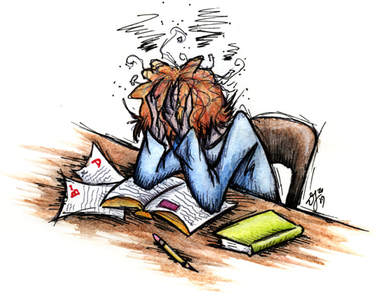
Get to bed at a reasonable hour. Staying up all night to study will only make you perform less well during the exam the next day. Whatever you managed to learn that night will be stuck because your brain will be too tired to be able to find it during the exam.

Also, your immune system (which protects you from germs) does not work well when you are tired. As a result, students often get headaches and runny noses because of germs that their tired bodies cannot fight off. All this lessens the ability to perform well on an exam.

What to bring to the exam:

Pack your bag the night before. Bring the following things 
  • A watch
  • A pen (make sure you have ink refills or an extra pen). Make sure it blue or black ink
  • A pencil for diagrams or tables (make sure you have a pencil-sharpener or an extra pencil). Some teachers ask for colored pencils - they should tell you in advance.
  • A ruler (some exams may require a protractor or a compass - the teacher should tell you in advance)  
  • A calculator. Many exams will say that you may not use it, but it is better to have it just in case.
  • A novel or something to read (which is not related to the class) in case you finish early. You may not leave the room until the teacher dismisses everyone.

Do not bring your cellphone. You won't be using it during the exam and you will have to turn it in to the examiner.
​
Do not bring "Typex", "Liquid Paper" or "White Out" to the exam. Such tools will waste your time because you have to wait for them to dry before you can write again. You should think before you write. If you make a mistake, draw a single line through it and start again. 


Disclaimer: The information contained in this website is for educational purposes only. ​Not all the resources  belong  to me and have given credit to the owner of the resources known. For the resources which are unknown, I just made sure that it doesn't belong to me. If you have any suggestions, kindly comment on the comment option in the home tab or send an email to [email protected]
Creative Commons License
Contributions to The Amazing World of Science is licensed under a Creative Commons Attribution-ShareAlike 4.0 International License.
Proudly powered by Weebly